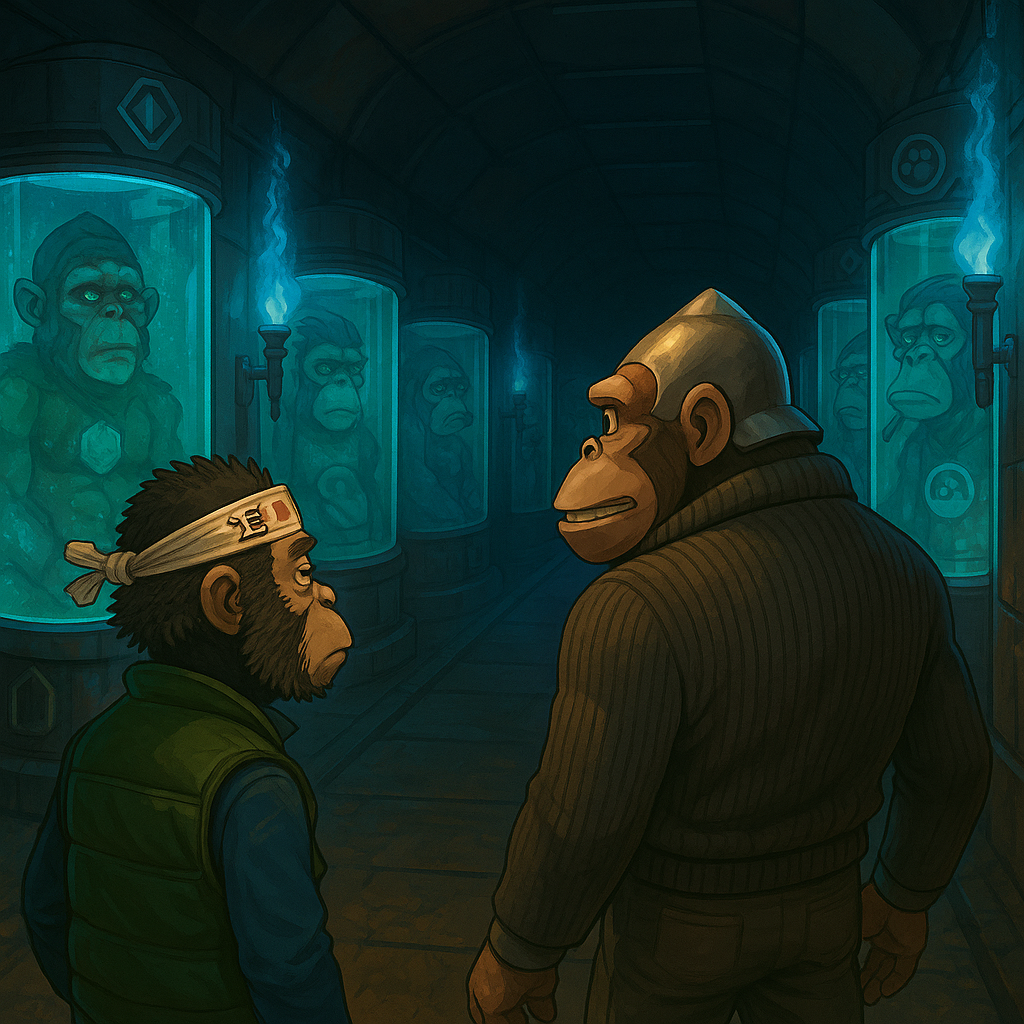
Five percent of dungeon gold you earn in chambers accrues to whoever owns the floor NFT slot for that node—parcel IDs 1–1000—with daily settlement around 03:00 ET, according to the open-source GravityRunner README on Apescape.
ApeChain culture lens: seasons, shared worlds, and attention
ApeChain-era NFT audiences are trained to think in seasons: drops, debates, trailer cycles, governance votes, and marketplace rotations. Apescape compresses part of that logic into a weekly rhythm—one procedural graph per season, resetting Sunday 03:00 America/New_York, with everyone on the same exits and floor NFT index per node for that week.
That is editorially useful because it makes “shared world” concrete: not a slogan, but a schedule and a graph you traverse with explicit commands.
Weekly map, shared by everyone
Each season is one procedural graph: the map resets Sunday 03:00 America/New_York, and all players share the same exits and floor NFT index per node for that week. You leave the surface with step, then move with go up, go down, go left, or go right (energy applies on the graph).
Land tax vs. death tithe
- Land tax: 5% of dungeon gold earned in chambers flows to the floor slot owners (parcels 1–1000). Settlement runs daily ~03:00 ET. Wallet-side commands include
land claimandland collect(see README command list). - Death tithe: When you die, 5% of the value of backpack lines lost goes to the server vault. The same daily settlement window splits the vault among registered land owners, equal per owner (not proportional to parcel count—per README wording).
Your surface stash is separate: ledger or bank survives death, and bank also surfaces the server vault balance when relevant.
Why this is worth watching next to ApeCoin and Yuga headlines
Apescape is a browser-first build with wallet-linked saves and NFT-shaped land metadata in the UI—it is not an official Yuga Labs or ApeCoin DAO product. Treat the README as the behavior contract: percentages and schedules can change there before blog copy catches up.
Still, for readers who follow APE and NFT gaming narratives, these mechanics are a clean contrast point: they show how tax-like routing and shared pools can be described with numbers and timestamps—useful discipline when evaluating louder projects with fuzzier documentation.
Spotlight projects: demand the same clarity elsewhere
When we spotlight collections or games in the NFT space, the bar should be documentation-first: what accrues, what resets, what wallet permissions are required, and what user risks exist. Apescape is not a benchmark for every project type—but it is a benchmark for honest mechanical writing.
Read next: GravityRunner README — Major features & commands.
Quick ecosystem anchors
- ApeCoin · APE on CoinMarketCap
- Yuga Labs · Otherside
- G’s on Ape (independent culture signal)
Mechanics described from the project README as of 2026-04-12.
ApeChain Pulse covers Apescape editorially. The game is an independent project. Not financial advice. Digital assets are volatile; this article is informational. Verify live behavior in the published README.
README checked: 2026-04-12.